Summary - An Introduction to IP Media Networks
Summary
For decades, professional broadcast systems have been built using baseband technologies with the following characteristics: fixed signal paths, embedded timing and clearly defined physical infrastructure. IP-based media transport represents a significant architectural shift. For engineers and operators new to networking, it can initially appear complex or unfamiliar. This guide explains the fundamental building blocks of a modern IP-based broadcast facility and how they work together to transport, synchronise, route, manage and control media signals. Rather than focusing only on standards and protocols, it also explores how practical broadcast workflows are implemented using technologies such as ST 2110, ST 2022-7, PTP, multicast networking, device management and broadcast control systems.
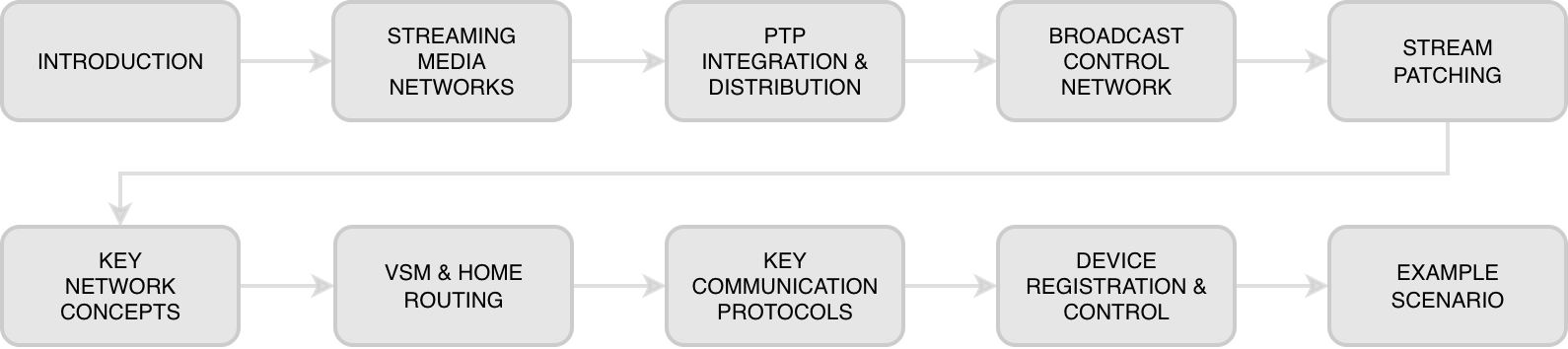
- Chapter 1 - introduces IP media infrastructures, key terminology, relevant standards and the major functional components used within modern broadcast facilities
- Chapter 2 - explains how media is transported across Streaming Media networks using RTP, multicast, ST 2022-7 redundancy and PTP synchronisation
- Chapter 3 - explains the Broadcast Control network, stream patching workflows and the networking concepts that allow IP facilities to operate as a unified system
- Chapter 4 - explains how HOME and VSM perform routing, device registration, orchestration and control within an IP-based environment
- Chapter 5 - brings the previous concepts together through practical routing and workflow examples that demonstrate how a modern IP broadcast facility operates
This guide is written for customers, broadcast engineers, system designers, and technical stakeholders who are evaluating or planning a move toward IP-based broadcast infrastructure. Some readers may come from a traditional baseband or SDI background and be new to IP networking. Others may be newer to the broadcast industry and need a clear explanation of how ST 2110-based facilities are structured and operated. The goal is not to turn every reader into a network engineer, but to build a practical understanding of the key concepts, design choices, standards, and communication methods used in modern broadcast IP systems. By the end of this guide, the reader should understand the core principles behind modern IP media networks, the role of standards such as ST 2110, ST 2022-7 and ST 2059, and how technologies such as multicast, PTP, routing control and device orchestration work together within a broadcast facility. More importantly, the reader should be able to relate these concepts to familiar broadcast workflows and understand how modern IP infrastructures can be engineered to deliver the same levels of predictability, resilience and operational simplicity traditionally associated with legacy baseband systems.
Who is this guide for?
This guide is intended for broadcast engineers, systems engineers, operators and technical staff who want to understand how IP networking is used within modern broadcast facilities. It is particularly suitable for readers moving from traditional baseband or SDI environments into IP-based production.
- Level: Beginner
- Estimated reading time: 60-90 minutes
- Recommended first: This is recommended starting point
Prerequisite knowledge
No previous networking experience is required. Familiarity with traditional broadcast concepts such as signal routing, video and audio infrastructure is useful, but the networking concepts used throughout the guide are introduced as they are required.
What will you learn?
After completing this guide, you should have a high-level understanding of the different network roles within an IP broadcast facility, how real-time media is transported using technologies such as SMPTE ST 2110, how PTP provides timing, and how broadcast control systems such as VSM and HOME interact with networked devices and media streams.